Wednesday, October 21, 2026

Not long ago someone told me, with complete certainty, that the United States had never been more chaotic.
Politics are more divisive than ever. The news cycle is relentless. Social media delivers a constant stream of outrage, crisis and conflict. Every notification seems to carry another sign that things are spinning out of control.
It is an understandable feeling.
But it is also worth asking a simple question:
Are things actually more tumultuous today or are we simply hearing about everything, all the time?
A quick look back at the last century of American history offers some perspective.
The 1920s began with Prohibition, a nationwide ban on alcohol that fueled organized crime, corruption and violent turf wars. The Ku Klux Klan surged in power. The nation wrestled with cultural clashes over religion and science in the famous Scopes trial. The decade ended with the 1929 stock market crash, plunging the country into the Great Depression.
In the 1930s, unemployment reached roughly 25 percent. Banks collapsed. Families lost homes and farms. The Dust Bowl forced mass migration across the country. Labor strikes sometimes turned violent as workers clashed with corporations and police.
The 1940s brought World War II, the deadliest conflict in human history. More than 400,000 Americans died in the war. Japanese Americans were placed in internment camps. The decade closed with the dawn of the nuclear age and the beginning of the Cold War.
The 1950s were marked by nuclear anxiety and anti-communist hysteria. The Korean War claimed more than 36,000 American lives. Senator Joseph McCarthy launched aggressive investigations into alleged communist influence in government and Hollywood. At the same time, the civil rights movement began to challenge segregation, sparking fierce resistance in many parts of the country.
The 1960s may have been one of the most turbulent decades in modern American history. The nation witnessed the assassinations of President John F. Kennedy, Martin Luther King Jr. and Robert Kennedy. The Vietnam War escalated and sparked massive protests. Cities across the country experienced riots. The Cuban Missile Crisis brought the world to the brink of nuclear war.
The 1970s saw the Vietnam War end in painful fashion, the Kent State shootings during anti-war protests and the Watergate scandal that forced President Richard Nixon to resign. Americans waited in long gas lines during the oil crisis and watched the Iran hostage crisis unfold on nightly television.
The 1980s were defined by Cold War tensions, the AIDS epidemic, the crack cocaine crisis and the Iran-Contra scandal.
In the 1990s, Americans watched the Gulf War unfold on television in real time. The Rodney King beating sparked riots in Los Angeles. The Oklahoma City bombing became the deadliest act of domestic terrorism in U.S. history. President Bill Clinton was impeached. School violence entered the national conversation after the Columbine shooting.
Then came the 2000s.
The attacks of Sept. 11, 2001 killed nearly 3,000 people and reshaped American life overnight. The country launched wars in Afghanistan and Iraq. Hurricane Katrina exposed deep failures in disaster response. The 2008 financial crisis triggered the worst economic collapse since the Great Depression.
More recently, Americans have experienced the COVID-19 pandemic, nationwide protests following the killing of George Floyd, the Jan. 6 attack on the U.S. Capitol and a political climate that many describe as deeply polarized.
Put all of that together and one thing becomes clear:
America has never been short on conflict, crisis or upheaval.
What has changed is the volume.
For most of the 20th century, people experienced the news in measured doses. A morning newspaper. The evening broadcast. Maybe a weekly magazine.
Today, the half-life of a social media post can be measured in minutes.
Events that once unfolded over days or weeks now spread across the country in seconds. Commentary arrives instantly. Opinions pile on top of facts. Algorithms quickly learn that outrage, fear and controversy keep people clicking, sharing and reacting.
The result is a constant sense of urgency, a feeling that everything is happening at once and that everything is somehow unprecedented.
But history tells a different story.
The United States has weathered depressions, world wars, assassinations, riots, political scandals, terrorist attacks and social upheaval across every generation.
The difference today is not necessarily the events themselves.
It is the speed and scale of how we experience them.
Perspective becomes harder when every moment arrives amplified.
That is one of the quiet responsibilities of journalism, not simply to report what is happening, but to place it in context. To remind ourselves that while history does not repeat exactly, it often rhymes.
The country has endured storms before.
And it will again.
The challenge for all of us may be learning how to hear the signal through the noise.
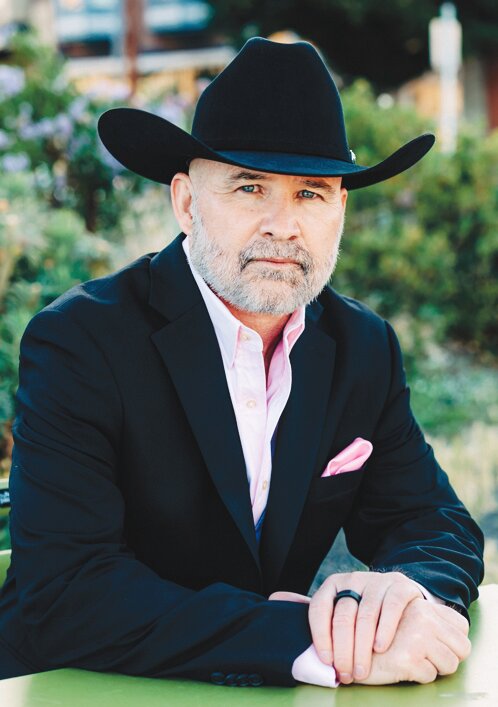
Terry Ward is the CEO of Ward Media and the publisher of NCW News, Cashmere Valley Record, Lake Chelan Mirror, The Leavenworth Echo, Quad City Herald, and the Wenatchee Business Journal. He can be reached at terry@ward.media.


Comments
No comments on this item Please log in to comment by clicking here