Wednesday, October 21, 2026

Assumptions are easy.
They fill in gaps.
They provide quick answers.
They allow us to move forward without waiting for more information.
In a world that moves quickly, that can feel efficient.
But assumptions come at a cost.
Most of the time, we do not even notice when we are making them. We see part of a situation. A decision, a headline, a comment, a short video clip. Our minds complete the story. We assign motive. We decide intent. We reach a conclusion before we have all the facts.
It happens quietly.
A city makes a decision, and someone assumes it was careless.
A school board takes action, and someone assumes it was political.
A business changes direction, and someone assumes it was driven by greed.
A person speaks, and someone assumes they meant the worst possible thing.
Those assumptions feel real in the moment.
But they are often incomplete, and sometimes entirely wrong.
The problem is not that people are trying to understand what they see. That is natural. The problem is how quickly understanding turns into certainty.
Once an assumption is made, it begins to harden.
We start looking for evidence that supports it. We interpret new information through it. We share it with others as if it were fact. And when someone challenges it, we defend it. Not because we know it is true, but because it now feels true.
That is how assumptions spread.
Not as questions, but as conclusions.
In small communities, the impact is magnified.
We are not talking about distant figures. We are talking about neighbors, business owners, volunteers, elected officials and parents. People we see regularly and rely on in different ways.
When assumptions replace understanding, relationships begin to shift.
Trust erodes. Conversations become guarded. People become less willing to engage openly because they expect to be misinterpreted. Decisions are judged before they are explained. Intent is questioned before it is understood.
Over time, that environment becomes difficult to sustain.
People who are trying to contribute begin to feel discouraged. Public discussions lose depth. Fewer people are willing to step forward into roles that invite constant second-guessing.
All of this can start with something as simple as an assumption that was never checked.
This does not mean we should avoid judgment entirely. Communities need accountability. Decisions should be evaluated. Actions should be questioned when necessary.
But there is a difference between evaluating what someone did and assuming why they did it.
That difference matters.
One approach invites clarity. The other creates division.
Slowing down that moment between observation and conclusion can change the direction of a conversation.
It can look like asking one more question.
It can look like seeking additional context.
It can look like allowing for the possibility that there is more to the story than what is immediately visible.
It can also look like acknowledging something simple.
We might not have the full picture yet.
That kind of restraint does not come naturally in a fast-moving environment. It requires intention. It requires patience. It requires a willingness to be temporarily uncertain.
But the alternative carries a higher cost.
Assumptions may save time in the moment.
They often cost us accuracy, trust and understanding in the long run.
A strong community is not one where people never make mistakes. It is one where people are willing to pause before turning incomplete information into a firm conclusion.
Sometimes the most responsible thing we can do is hold a question a little longer.
And make sure we understand before we decide.
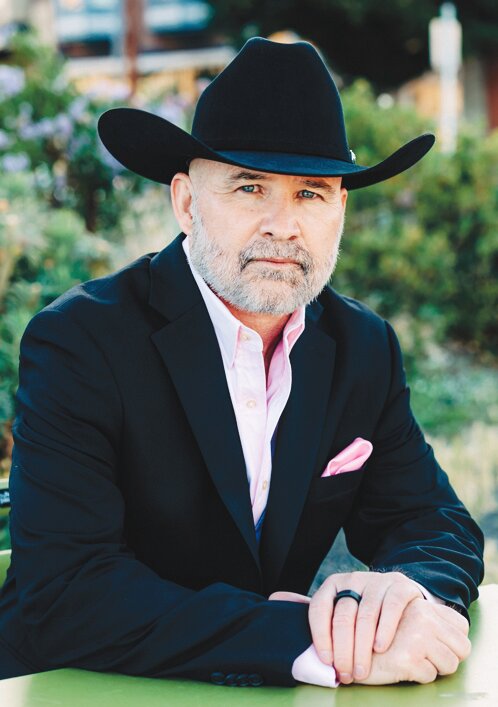
Terry Ward is the CEO of Ward Media and the publisher of NCW News, Cashmere Valley Record, Lake Chelan Mirror, The Leavenworth Echo, Quad City Herald, and the Wenatchee Business Journal. He can be reached at terry@ward.media.


Comments
No comments on this item Please log in to comment by clicking here